
Home / Dementia training
Dementia trainingWalk in their footsteps.
We built an augmented reality simulator that lets a caregiver experience advanced dementia first-hand. It builds empathy and understanding faster than any class we have seen.
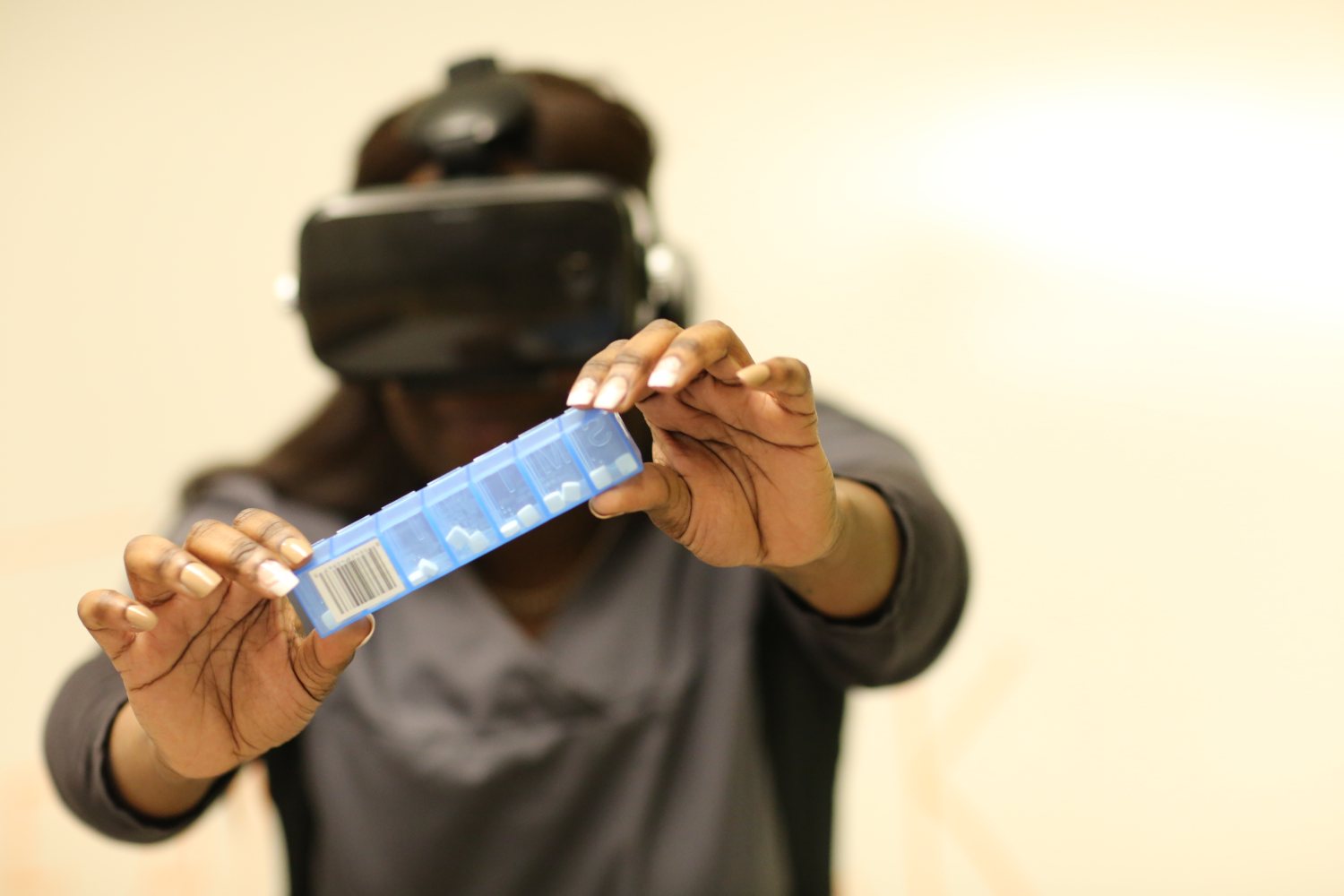
“You don’t know what they actually go through until you have a moment in their shoes.”
A Balanced Home Care caregiver, after her session in the simulator
Read the transcript
It was actually really, really enlightening. I feel what the residents that we deal with on a daily basis are feeling. And it’s making me feel more compassionate and understanding, and actually a lot more patient, because it was frustrating for me, and it was just for a short period of time. And I understand now that this is what they deal with on a daily basis, and it’s never ending. So it actually is an emotional thing that you have to deal with, because you don’t know what they actually go through until you have a moment in their shoes.
The program at a glance
- What it is
- An augmented reality dementia simulator and empathy training
- Created and owned by
- Balanced Home Care
- What it simulates
- Advanced dementia, with hearing loss and impaired vision
- Who it trains
- Balanced Home Care caregivers, and the staff of communities we serve
- Cost to a partner community
- None
- Reach so far
- More than 600 staff at a Michigan health system's skilled nursing facilities, in addition to our own caregivers
What is Walk in Their Footsteps?
Walk in Their Footsteps is an augmented reality dementia simulator created by Balanced Home Care. A caregiver puts on a headset and experiences the world the way a person with advanced dementia does. The purpose is empathy: a caregiver who has felt it responds differently to the residents who live with it.
How does the simulator work?
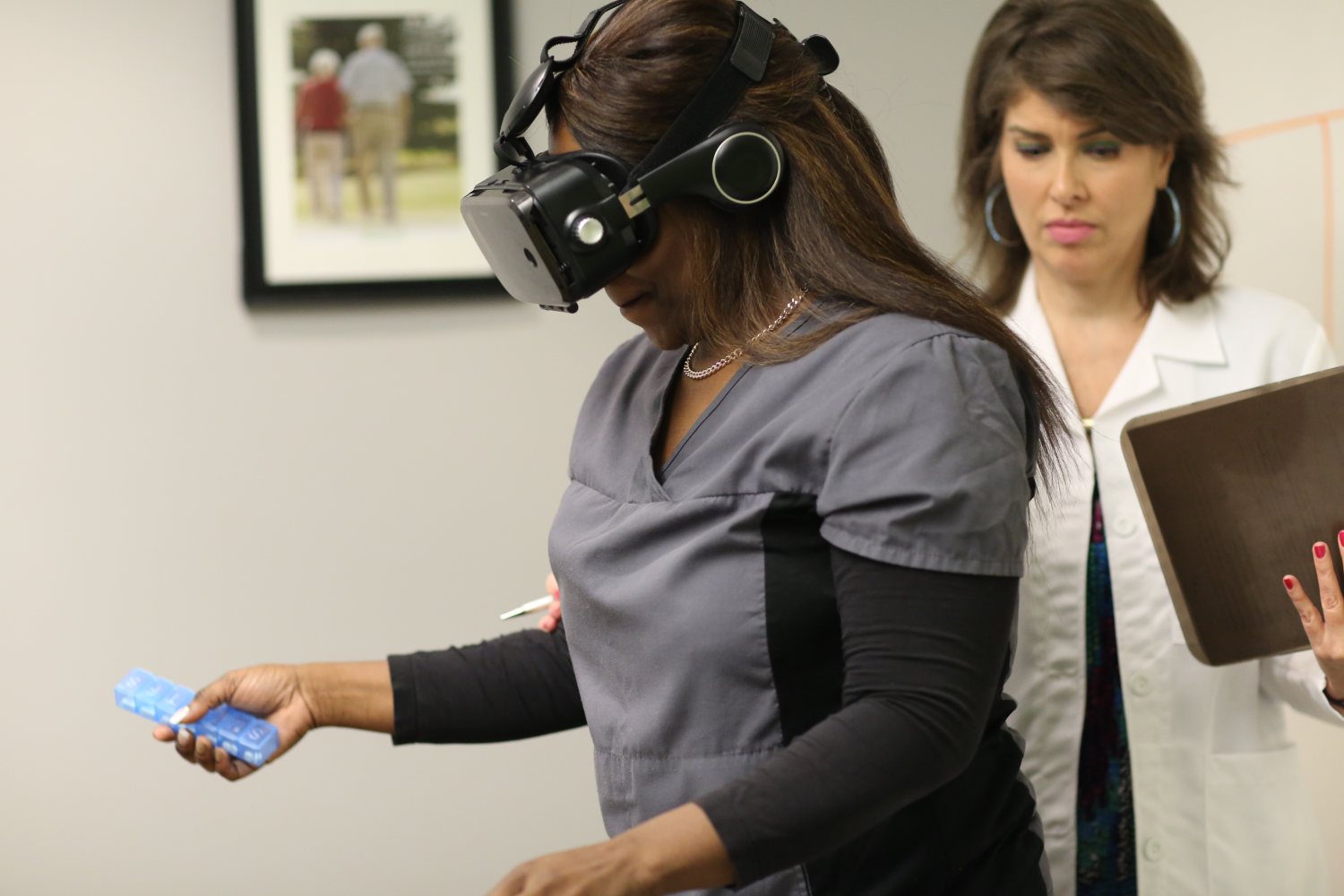
The headset changes what the wearer sees and hears while they try to do ordinary things in an ordinary room: fold a towel, hang up a shirt, open a pill box. It simulates advanced dementia together with the hearing loss and impaired vision that so often come with it. Because it is augmented reality, the wearer is still in the real room with real people, which is how a resident experiences it. A facilitator leads each session, and the group talks through what happened afterward.
Why train this way?
Dementia is hard to teach from a slide. A presentation on brain structure and behaviors is easy to tune out. A short time spent confused, unable to follow an instruction and unable to explain why is not. Caregivers come out understanding why a resident resists, wanders or shuts down, and what helps.
Who built it?
We did. Balanced Home Care created the program and the software to train our own caregivers, and we own the software and the equipment. It is not a purchased course, and we have not found another home care company in Michigan that trains this way.
Who goes through it?
We run sessions for Balanced Home Care caregivers. We have also taken it outside the company: more than 600 staff at a Michigan health system's skilled nursing facilities have been through it, from front-line caregivers to social workers, directors and administrators, and the facilities asked us to come back and repeat it.
What changes afterward.
“You have to make them comfortable and be able to trust you, and I never understood that until I actually did this exercise.”
Caregiver, Balanced Home Care · 1 minute
Read the transcript
You know, you get residents who are reluctant to do what you’re asking of them, and you don’t understand why. But a case in point was when we were doing this exercise, and there was a piece of paper on a table that was right in front of me that I was supposed to reach for, and I couldn’t quite find the table. One of the instructors guided me over to the table, but it still was scary, because I’m thinking, I don’t know where this is, so now I have to trust her to not run me into the table and to get me to where I’m going. So it actually gave me a really, really good understanding of what it’s like for those residents to go through that. You have to make them comfortable and be able to trust you, and I never understood that until I actually did this exercise.
“If it was my mother and she was in this situation, what would I do? It was a very emotional but amazing experience.”
Caregiver, Balanced Home Care · 30 seconds
Read the transcript
It changed me a lot. Just to see how dependent the residents are on us. They depend on us. They treat us as if we are family. It almost made me want to cry, because it was something that I looked at as, if it was my mother and she was in this situation, what would I do? So it was a very emotional but amazing experience.
What do people outside the company say?
Reactions are strong. Some people become frustrated, some go quiet, some are moved to tears. These are things staff said after sessions at skilled nursing facilities:
- “No wonder my patient is doing this behavior.”
- “I can't believe this is what they have to deal with every day.”
- “For the first time I know how to help my patients better.”
- “I wish I would have done this years ago.”
Can our community's staff take part?
Yes. Communities we serve get Walk in Their Footsteps sessions for their own staff at no charge. The people who first notice a resident's memory changing are often at your front desk, in your dining room or on your housekeeping team, and the session is built for them as much as for caregivers.
What does it cost?
Nothing for a community we serve. It is part of what we bring when our team works in your building.
Tell us about your community.
We will call you within one business day. Your first conversation is with our owner, Chris Warburton.